The World We Want
Let’s imagine what an abundant future actually looks like: a world where anyone can do anything they want, supported by Universal Basic Everything, powered by flexible machine labor on demand.
Grant Harvey · Futurespective
Isn’t it ironic that the AI industry sucks at pitching what could be the most compelling story in the history of humanity?
The industry gestures towards a future of abundance: machines that can do anything, leading to an intelligence explosion, where everyone gets rich through “universal high income.” What it never says is where YOU fit into that equation.
The best its leaders can offer is, “You’ll probably lose your job, but it’s worth it, because we might cure cancer.”
That’s a terrible vision for the future, and naturally, people hate it: 52% of American adults are more concerned than excited about AI in daily life, and only 9% are more excited than concerned.
So what should the industry be building toward? Surely no one disagrees that a post-scarcity abundant future would be nice, right? But what does that actually look like?
What will humans do in it, and how could our lives be better than they are today?
And how do we prevent it from becoming a hyper-capitalist cyber-punk hellscape where we live on the pennies our AI overlords deign to give us?
Here’s my attempt to answer those questions.
Let’s begin.
The World We Want is a series of 25 essays and 24 short films, plus a whitepaper, about one question: what should life look like once machines can do almost any job?
My answer has a name, Universal Basic Everything: the essentials free for everyone, an equal share of the machines that make them, and first pick of any work you want to do.
Everyone gets the essentials themselves, not a check to buy them, because a check only works when there’s enough of what it buys. Hand everyone more money for rent, and rents just rise to meet it.
So we share what the machines make as things, not checks. Above the essentials, money still matters for what stays scarce, like a beachfront or an original painting.
Who’s going to pay for all of this?
First, it’s worth remembering what money is: make-believe, a way to package belief as value. (I dig into that in Remix Will Kill the Copy, Not the Creator.)
And right now, big corporations and investors are pouring their belief into AI. They’re funneling enormous amounts of money into models, chips, data centers, and robots.
So my answer is: let them pay for it.
This is by Grant Harvey, who writes Futurespective on Substack.
This project grew out of two earlier essays. One proposed Data Foundries, where people train machines and share in what they earn. The other answered Sam Lessin’s argument that AI is a meaning crisis, not a labor crisis.
Where we are today
Almost everything you want to do in life comes down to one question: can you afford it?
Think about your rent or your mortgage. For most of us, that’s the primary concern most days. But there’s also your grocery bill. Your power bill. The doctor’s visit you keep putting off. And once all those are paid, there’s that idea collecting dust in your notebook, still just a dream because you’ve never had the money or the time to make it real.
Even if you’re a billionaire, this rule still applies to you. All the things you need and want come with a price.
But why do things have a cost associated with them? Why aren’t they just free?
Well, those things cost what they cost because the work and the materials that go into them are scarce.
A house costs months of skilled work, plus lumber, copper and concrete to produce. A doctor’s visit costs a decade or more of someone’s life spent on specialized training, not to mention the nurses, the equipment and the building around them. Your groceries cost a season of farm work, then the trucks, fuel and cold storage required to get them to the shelf, let alone the cost of the shelf itself. Your power bill costs a whole power plant, the fuel it burns, and the time of the crews who keep the lines up.
And that’s just where the price begins (the cost of the goods and services). When there aren’t enough homes in the places people actually want to live, whoever has the most money bids for them, and everyone else pays the new price, or they don’t get to live there.
Healthcare has its own tangle: too few doctors and nurses, serving a need that nobody can put off, and ten plus years of development required for every new treatment.
Underneath, this is all the same story. There isn’t enough to go around, so what we have goes to whoever can pay the most.
This is why most of us spend the majority of our waking hours earning the money we need to cover the bills, regardless of whether or not this is the work we’d actually choose, if given an actual choice.
Where this is headed
Here’s the part the AI industry leaves out of its pitch. The major labs claim that once AI is general enough to be considered “artificial general intelligence,” or AGI, it will be able to do anything a human can do. Many have predicted that once that happens, nobody will hire a human for anything, because the machine will always be cheaper. So your paychecks will disappear, but your bills will stay right where they are.
If things play out the way the AI companies have outlined, they’ll own everything, or most of everything, and we’ll become essentially purposeless ghosts drifting through their world, living on whatever pennies they hand us.
Their AGI systems will make the critical decisions and do all the jobs, and we’ll be left to organize ourselves who knows how.
The important point here is that none of this is designed around us.
This is the opposite of human-centered design. And it’s why humans don’t like it.
What if we set it up a different way?
Focus on one thing, the golden rule of the world we want:
If a human wants to do it, a human gets to do it.
What does this mean, in practice? It means we shouldn’t build the machines to replace us. Instead, we build AI systems to flex around us, and fill in the gaps of the work we don’t want to do. It means when a human wants to do a type of work, that work is theirs. And when nobody wants to do that same work, that’s no problem, because there are plenty of machines to cover it.
Consider this simple example: do you need a chair? Want to build the chair yourself? Do it. Don’t want to? A machine can.
This implies the machine can build the chair at least as well as you can. So the AI industry assumes when this happens, machines can make all the chairs we want, and therefore no human would ever want to make chairs. But that’s just not how humans work.
That’s not WHY humans work.
It’s true that today humans work because we need money to pay rent. But having enough money doesn’t make people stop working. When researchers asked workers in the US, the UK and Denmark, about one in five said they wouldn’t leave their work even if they were paid their full salary to stop. Only 20% would take that deal, but many more would take that money and go work on something else. Humans will ALWAYS want to do things.
So what if, instead of forcing humans to choose between either doing one single thing for “a job”, over and over, again and again for forty hours a week to pay for rent, or having nothing to do because machines can do it all, we choose a third option?
That third option is allowing the person who does want to make a chair that day to show up and make a chair.
But why does that person want to make a chair? Maybe because they are curious to learn how to make chairs. Or maybe they get fulfillment out of making high quality chairs. Maybe they make the BEST chairs, and they love making the best chairs. Maybe they just love the process of making chairs. Maybe the process itself brings them joy.
And yet, people are multifaceted. We’re moody. We don’t always feel like doing things.
So the answer isn’t to force the person who loves making chairs to do it forty hours a week to make a living. The answer is to build a dynamic system around the person who loves making chairs so that if today they feel like sleeping in, getting a late brunch, and going to the park with their mates in the afternoon to kick a football around, they can do so without it costing them the roof over their head.
This dynamic system is possible to create if we build something called “machine labor on demand.” There’s more detail on this below, but imagine a system of labor that flexes up or down depending on the human demand to do a certain type of work.
We’re used to building supply around people’s demand for goods and services. We’ve never built it around people’s demand to do the work itself. But if you think about work being the same as play, at least when people do things they enjoy for a job, then it makes perfect sense.
That’s why there will continue to be demand for labor from human laborers themselves, just as there will be demand for goods and services.
The industry usually says AI will create jobs we can’t imagine yet, or that the jobs of the future will look like play to the people of today. But doing “jobs” or even identifying as “labor” isn’t the right way to think about what we’ll do in the future.
Think of the future more like a video game. You’ll have tasks you’ll want to do to grow your skillset in a given area, and you’ll have quests you’ll want to go on to accomplish certain goals. And you’ll do these things because you want to, not because you have to.
Just like you choose what quests you’ll accept in a video game, you’ll choose what quests to go on in real life. Sometimes with a party of allies, sometimes solo. But always because you feel a purpose to do something, not just to pay your rent.
Do you see how this is different from what you’ve been told about the future by the AI industry? This is not a future where we pause or stop AI development to protect human labor in today’s current system. And it’s not a future where machines do everything and we’re left to untangle a meaning-crisis that breaks down civil society.
It’s possible for humans to coexist with machine intelligence, by making a world where we all live together and still have room to do meaningful work. But for this not to turn into a capitalist cyberpunk hellscape, we need to encode the golden rule into law.
Now, this golden rule has one limit, and it’s safety. The things everyone depends on, like power, water and emergency care, have to keep running no matter who shows up to work that day, so the machines should probably always stand behind them. There’s no reason humans can’t help with this, if they choose to, but the point is that critical services will be staffed 24/7, and everything else can be staffed according to demand or passion.
So internalize this golden rule, for it makes everything else work: If a human wants to do a job, a human gets to do it. Point blank, period.
What that makes possible
This idea is all about what happens if we prioritize human agency above “productivity.” What if you didn’t have to work for a living, and could live for a living instead? What would you do?
For example, what if work and play were the same thing? You’d still work hard, because you’d want to create something meaningful and new, or because you’d want to hone a skill until you’ve mastered it. You just wouldn’t need a job you hate, one that drains you every day, to make a living. You would simply live your life, and live well, with purpose.
That’s what a world of abundance looks like to me. A world where you can do anything you want.
You have a brilliant idea. Congratulations. You can finally afford to build it.
Your town needs housing. Congrats! It can afford to build that, too.
Your grandma can afford her surgery, because it’s free. Your groceries don’t go up in price because of some change in oil supply halfway around the world.
You finally have access to everything you need. You can afford all of it, because it’s free.
To build this system and make it run properly, we first need to solve the problem of price. We need to reduce the cost of the things we need down to their bare essentials. And then, we can use science to reduce those costs even further.
Why do this? So that the things everyone needs become free, at today’s level of quality, and then some. When that’s done, when these base needs are met, our time can become ours to spend on whatever we choose.
In order to make all this possible, however, we need to do three key things. And it should be the #1 priority of everyone who wants to build this world we actually want to live in to help make these three things happen, as soon as we can.
Let’s review them now, and why they matter.
One: build machine labor on demand
The first is to build machine labor on demand.
What’s that? Machine intelligence (AI) inside a machine body (robot). An AI-powered robot that can help plan any kind of work, then physically go do it.
Intelligence that can design a house, embodied in machines that can help build it.
The vision is to build enough capacity of machine labor on demand to make excess useful labor available when people need it.
Then, we scale this useful machine labor around the ebbs and flows of human needs and desires, the way we build electricity supply around power demand.
Think of the power grid: it’s purposefully built big enough to meet peak demand on the most demanding day of the year, so on every other day, there’s capacity to spare.
Here’s why it’s built that way. Electricity is hard to store, so nearly all of it has to be made the instant it’s used, and the grid can never come up short, not even for a minute. So the people who run it plan for the single most demanding hour of the year, often the hottest afternoon of the summer, plus a cushion on top. Some power plants exist only for those few days, and sit idle the rest of the year.
We should think of machine labor the same way. Some days, we’ll want to work hard in our given pursuits, or contribute to our local communities. Other days, we’ll want to rest and hang out with our friends, or do other things. Perhaps they will be new, more difficult things that take time to learn. Or new things no one has ever done.
If we design machine labor to fill in for us on those days we don’t want to do our given pursuits, or to accommodate local communities where people are constantly changing the work they do without the local infrastructure completely collapsing, then we can easily cover all our needs while still leaving room for human demand to do things.
And here’s where machine labor beats the power grid. A power plant that isn’t running can’t do anything else, so the grid’s spare capacity just sits there, and everyone pays for it. A spare machine can be pointed at whatever we decide is worth doing. On every day below the peak, that’s surplus labor: machine hours nobody is using, ready for any project.
There are many forms this flexible supply of machine labor could take, but the most promising is some kind of local fleet that anyone can call on at any time. Kind of like a library, but for machine labor, where anyone can borrow machine labor for any quest at any time.
Of course, people will want a robot of their own, just like they want books of their own. So everyone will have their own personal machine as one of the essentials, plus an equal right to call on any other idle machine from the fleet of local supply as needed.
It’s worth imagining the robots of tomorrow being much like the computers of today. Only in the future, your computer will become your robot, and vice versa. That’s what machine labor means here: machine intelligence (AI computers) plus machine bodies (physical robots) in one unit.
Your personal computer will just be your robot, that follows you around and remembers things for you, enabling you to do digital work through a projector or physical work through its own arms and legs. Like C-3PO, but you can play games on it.
Two: point machine labor at everything scarce
Right now, the AI companies are selling investors and enterprises on using AI as a fill-in replacement for human workers.
But the goal of the industry should not be to point the machines at our paychecks. Instead, it should be to point them at our bills.
The problem is, one person’s bill is somebody else’s paycheck, and vice versa. So how do we use machine labor to reduce somebody’s costs without reducing another person’s paycheck?
Again, we come back to the problem of price. Today, price is the function that flexes up and down with human demand. When more people want something, its price goes up, and when fewer people want it, the price comes back down.
But that’s only half of it. Price flexes with supply, too. When there’s plenty of something, its price falls, and when there isn’t enough of it, its price climbs. It’s why the same house costs so much more in a crowded city than in a town with land to spare. As such, price is a proxy for both supply and demand.
Nobody can lower the demand for food, or for a home. What machine labor on demand can change is the supply.
So what if we remove price from the equation? Not for everything, but for everything important.
Take yourself out of the equation for a moment. Today, you might work at a grocery store, or as a farmer. You might build homes, or sell them. You might work in healthcare, or finance, or energy. As such, you have a vested interest in the price of these goods being high enough to continue to pay your bills.
But for every one of those things that currently pays you money, the rest of them drain your bank account as a bill. You’re just betting that the thing that pays you will remain higher than the things that drain you. You’re hoping that your inflows stay higher than your outflows.
Right now, many people feel the opposite is true. The outflows keep rising, while the inflows stay the same.
So, what’s to be done? Well, once we have sufficiently general machine labor on demand that can do any job a person can do, just as well as a person can do it, then we can start to lower those outflows, and keep lowering them until the size of our inflows matters a whole lot less.
Elon Musk has a name for where this leads: “Universal High Income,” a future where the machines make so much that everyone has a high income and can afford whatever they need. He’s describing the same abundance, but income is the wrong metric to track.
We don’t actually want money, which is a proxy for value. We want the thing money buys us: freedom. Remember, everything we want to do comes with a price. So the goal shouldn’t be to raise everyone’s income until they can pay that price. The goal should be to take the price away.
Let’s say we have these general machines that can do work for us. We can use these machines to frame a house, run a power plant, grow food and stock a shelf. We can even have machines give us a health exam, though we might not like their bedside manner.
So why not aim these machines at the things our important bills are made of, and keep making more of them until we lower the price of those important things as low as they can possibly go?
This might make you scared if you work in one of those fields. But remember the golden rule. In the world we want, the work in your field stays yours for as long as you want to do it.
What changes is the pay. As the machines make more of what you make, the price you can charge for it will fall. In the world we want, you won’t need it to hold up, because your essentials come free, and you own a share of the machines that make them.
And if you don’t actually like what you’re doing now, and you’re only really doing it for the money, then you won’t have to anymore. Life is too short to spend it doing something you’re only doing to make a lot of money. It makes you wonder: why did we ever set up society this way? Well, we had to. Now we don’t.
But then of course there’s the problem of the bills. Just because the thing you do lowers in price, doesn’t mean your bills do.
This is why universal basic income will never work on its own; in today’s market-based system, whatever monthly check you get handed will just get swallowed by the rising prices of the goods and services you need to live. A check can carry people through the years it takes to build all this, but it can’t be where we end up.
What’s the answer? It’s called “Universal Basic Everything.” Imagine everything you buy and use today, at today’s level of quality, but available for free.
You need groceries, well then you just go into the store and take what you need for the week. You need to visit a doctor, well you just go ahead and make an appointment, no insurance necessary. You need a home, well there’s one for you, because machines can build a house anywhere there’s land to spare. Land is the hard part, so the house with the ocean view will still cost you.
Machine labor on demand can make this a reality, so long as we first dedicate it to the critical resources that are scarce today: producing clean energy, recycling and mining materials, and desalinating drinking water.
Then we can use it to scale critical skillsets, like engineering talent, research scientists, and healthcare and construction and agricultural professionals.
We can then put the excess machine labor on demand to work producing more of what everyone needs: food, housing, energy, healthcare.
Once there’s more than enough of all of these essentials, these essentials won’t need a price tag. They can become free: imagine being entitled to a reasonable week’s worth of all the things you use, every week, covered for every person and family, with about 20% extra to spare for the weeks you’re hosting, or just want a little more.
That means the home we live in, the groceries we buy for our families, the power and water we use, getting where we need to go, staying connected to each other, going to school, seeing a doctor when we need to, and the things we do for fun, too.
Nobody has to fill out a form or prove they’re poor to get them. And nobody will feel ripped off paying taxes into it, because nobody is paying for a service they can’t use themselves. We make enough of everything that everyone gets access to the same things, so there are no freeloaders to resent.
That’s what “universal” means. It means for everyone, regardless of need.
There’s one condition. Making more of something doesn’t make it free by itself, because whoever owns the machines gets to set the price. So this only works if the people who use the machines also own them. How that works is covered below.
And if you find purpose in preparing food, or treating patients, or working in the energy space and making things run, then by all means, you should continue to be able to do that.
These roles should still be available for those who seek them out; we’ll first need these professionals to teach the machines, and once the machines are sufficiently capable, then the professionals can retire, or take a break, or work less hours, or work MORE hours, all without worrying about paying the bills, because they’ll be covered by Universal Basic Everything too.
Beyond all that, we can build even more machine labor on demand to help us make all kinds of new devices, fix critical infrastructure, improve our local communities, and pursue all kinds of weird and wonderful new projects and developments.
Some of the things we want to do will need money to coordinate excess demand. Some things are destined to stay scarce, like beachfront property or an original one of one painting. The things humans make themselves, that they put their human time into, will also still have value. We can use money to tip the people who make these things, or bid up the price of limited drops so we can flex on our friends.
But the important thing is that everyone should be maximally free to do what they want to do, and have everything they need to live covered without needing to pay for it. This is what Universal Basic Everything should look like. And if we want to build a truly abundant economy, this is how we do it. Make everything we need to live free.
Three: reorganize ourselves around it
With the machines built and the essentials free, the next thing we’ll need to do is probably the most important: organizing ourselves around all of it.
This is why the golden rule is the golden rule: if a human wants to do something, a human gets to do it. This is critical for maintaining order, structure and purpose in our lives.
So where does purpose come from? It comes from curiosity, competition, and caring for others. There’s a fuller case for all three, and a closer look at competition.
In today’s world, the thing we do for work tends to define how we spend most of our time. In the future, it could be the things we do for fun that determine how we spend most of our time. We’ll either do one thing we love because we love doing it, or do lots of things we love because they’re fun and challenging and often entirely new.
This comes with a unique challenge, though: how should we organize ourselves when “work” is no longer the central organizing structure of our lives?
Retired people will tell you that navigating the post-work world can often be a challenge. Things that often help are routine, structure, and community.
Therefore, the question of how we team up to do things we love or get important things done is of utmost importance. There are some ideas for that, too.
How we team up
With all our universal basic needs met, and plenty of excess machine labor available to call upon, we can build all kinds of weird wonderful things on demand.
Imagine what passionate people will be able to build when just getting through the month stops consuming the bulk of their waking hours.
Think about the business you couldn’t afford to start. The film you couldn’t afford to make. The neighborhood project nobody had the time or money to take on.
In a world where you don’t have to pay for the essentials, you’re free to tackle these challenges. So what does that look like?
Perhaps these tasks no longer require “starting a company” to go do. After all, what’s the point of a company in a world where machine labor can do pretty much any job on demand? You no longer need companies to organize people. What you actually need are small teams of people to organize machines.
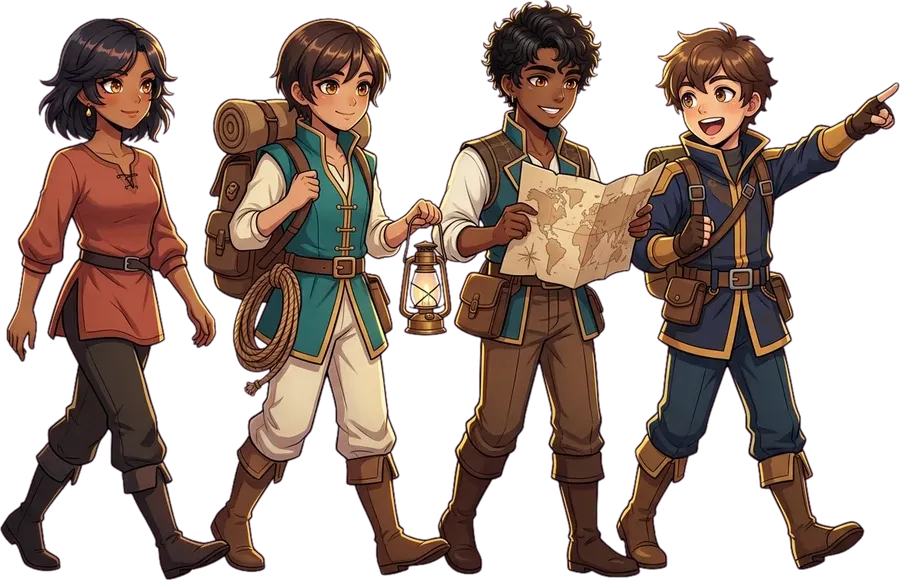
The best metaphor for this is a dungeon party. A ragtag group of allies who band together, each with a unique set of skills, bound and determined to take on a specific quest, and once that quest is completed, they disband (or go on another one).
This makes a lot more sense to me than starting a company that has to continually be profitable for years on end, seemingly with no end goal, in order to stay in business.
The point is, if you want to do something in the future, it makes much more sense to treat it like a quest, where you form a party, pool your time and your machine labor with a handful of like-minded individuals, and go do it.
When the quest is done, the party breaks up and everyone goes off to do something else. The exit is guaranteed upon success. No liquidity event necessary, because the goal is to do the thing, not “make number go up.”
Now, many of us are not so ambitious as to know what quest to go on. Some people just want to live a quiet, peaceful life. But those people will also be curious, and want things to do. And maybe there are folks who are personally ambitious, but more internally motivated. These folks will need a vehicle to organize themselves too.
For example, we will continue to have a need for specialist experts in every field. These specialist roles might not be jobs, as much as interest areas, but for those who provide a tangible service or produce a type of good, they will continue to want to share those goods and services with other humans.
So let’s say you want to get really good at something, or specialize in a given area. Borrowing from medieval tradition, perhaps you join a guild: an organization for people who share a craft, like baking or beekeeping or documenting medieval history, who teach it to others and get better at it together. Not to organize as a certain type of labor, but to pursue a given specialty for the sake of the specialty itself.
In this world, human ambition gets to set the agenda.
And machine labor on demand makes it possible.
Which begs the question:
Who owns the machines?
AI companies want to be the owners of the machines they rent to the rest of us. But anytime you rent something in today’s world, you pay a fee.
There’s a reason for this: these companies have raised vast amounts of money they need to earn back.
And the labs at the leading edge are, in a way, glorified middlemen. They train the best models, but they mostly run them on servers they rent from a handful of much bigger companies. Those bigger companies are building models of their own, and if their models ever got good enough, they could cut the labs out. It probably won’t happen soon, because the labs are some of their biggest customers. It’s complicated. But it shows how much comes down to who owns the hardware.
Ownership is a beautiful thing. In the future, you’ll want to own your own intelligence as opposed to rent it. And you’ll want to own your own personal robot, too.
For most people, one computer is more than enough. That will probably be true of robots as well. And yet, the more ambitious will want as many computers as they can get their hands on. The problem with developers in the AI age is that their compute often outstrips their ambition. That means they have more AI coding capability than they have good ideas to spend it on.
So we have guilds, and we have parties taking on quests. Both of these groups will have demand for machine labor. This demand will need to be coordinated.
If machine intelligence and machine labor are owned entirely by a handful of companies, that coordination will go through them, leaving the rest of society at their mercy. This will mean that they can raise prices however they like.
And if a big central government tries to run it all from the top down, as could happen over the next few years, then it’ll gum up the works of coordination too. Government at that scale is, to put it kindly, not known for being an efficient coordinating body.
To be clear, none of this proposes that the government own any of it. Government should be as hands-off as possible: a strong safety net underneath everyone, and otherwise out of the way. The control that matters here is local and regional, held by the people who live there.
That still leaves government real work to do. It can send people a monthly check through the years when wages are falling and the essentials aren’t free yet. And it can write the ground rules into law, like a minimum floor that every town has to meet, and the trusts that let residents own their machines.
So what’s the best model for coordinating machine labor and demand? It’s the power grid. But put all of it under one central owner, and you get a single point of failure and a single hand on the price. So we should follow the microgrid model. A series of decentralized nodes that network together, but are independent from one another too.
A microgrid is a local power network that can run on its own. It generates and stores energy for a neighborhood, a campus or a town, often with solar panels, batteries and a backup generator. Most of the time it stays connected to the wider grid, buying power when it runs short and selling power when it has extra. When the wider grid goes down, it can cut loose and keep the lights on.
That’s the trade a microgrid makes. A few big central plants can be cheaper per unit of power, but one failure can black out a whole region, and whoever owns the plants sets the terms. A microgrid costs more to build. In return, the town owns its own supply, keeps running in a crisis, and still trades with everyone else.
Now apply that to machine labor. Each town runs its own fleet, big enough to cover its own essentials, and the towns are networked, so spare machines and spare goods can flow to wherever they’re short.
A better outcome than AI companies renting machine labor on demand to the rest of us would be if many decentralized nodes owned their own machine labor. Imagine everyone who lives in a town owning its machines together, in equal shares.
To enable the world we want, today’s builders should build not only their machine laborers but also the critical infrastructure a town runs on, like power plants, robotics factories and farms, and run them for a profit in today’s market-based system, but with a handover clause: on a date agreed up front, once the builders have earned a fair, capped return, the infrastructure passes to the town.
Alternatively, public funds could pay for it. Either way, after a set period, the power plant, the factories and the robots are gifted to the people who live there, held in a trust where every resident owns one equal share.
That trust is separate from the local government, so no town hall ends up with too much power. And the things that are too big for one town, like chip fabs and mines, are owned the same way by a group of towns together.
Think of Andrew Carnegie’s libraries, but for everything a town runs on. This could be the grand bargain between the corporations of today and the future citizens of tomorrow to enable the world we want: sell their wares today, get a return on their investment, then give it all back to the people who will rely on it for generations to come.
If the flywheel of the abundance economy spins as intended, it will enable a system that can continuously maintain and upgrade itself with each new generation.
This is my interpretation of what Google DeepMind’s economists call universal basic capital. When they rated eleven policies for an AI economy, it scored highest of all on agency and on ownership of the gains.
The vision here is that the people, like you and me, hold ownership in the machines and services we use every day; not big companies or big top-down government, both of which have been proven unworthy stewards of such control.
That’s not to say there isn’t a place for government in managing all of this, or that companies won’t play an important part. Today’s companies could eventually convert into the smaller package of parties and guilds, and become more regionally located.
And since the machines and the ownership of the machines will be regionally based, the shares will be structured in such a way that nobody can sell them (except when moving to another city, in which case they are exchanged with shares in the new city), so nobody can buy up the excess machines and local infrastructure in order to artificially drive up prices.
If you can’t sell it, then what’s the point of ownership? Control. Each share comes with one vote on how the town’s excess machines and resources are used: things like what gets built next and what kind of projects come first.
How we keep track of it all
To coordinate abundant resources, once we’ve achieved them, each town would keep a digital, always-up-to-date record of what it physically has and needs, starting with the meters its utilities already run, so surplus can flow quickly to wherever it’s short. The record tracks the town’s plants and stockpiles, never what any one person uses.
Again, the trading of abundant resources would work the way the power grid’s market moves electricity to wherever it’s needed, minute by minute, but for absolutely everything.
Here’s how that market works. Regional grid operators run auctions a day ahead and again in real time. Every few minutes, they set a separate price at each point on the grid.
A high price at one spot tells every power plant in the region where power is needed right now, and tells investors where to build next. The operators run the market. They don’t own the power plants.
And none of that reaches your house. You pay a steady rate, while the prices behind the wall change every few minutes. That’s the split we want for everything: a fast market between towns, and a steady floor at home.
Say one town has spare grain and its neighbor has spare solar power. They can easily trade, and only the difference in value is settled in dollars.
How it all fits together
Universal Basic Everything is the core value proposition of the abundance economy.
If we build this right, we can get to a point where, for the things everyone needs, money and paying for things is no longer the best way to organize ourselves and our goods and services.
We will move into a world where we just produce things sustainably, in a flywheel, and the work required to do so is handled by machine labor on demand, while the work we humans choose to do becomes the things we care about enough to do for the love of it. Passion projects will be everything.
That world is the abundance economy. Universal basic capital is how we distribute what it makes: everyone owns an equal share of the machines. And universal basic machine labor is how we manage it and make it all possible.
Universal basic machine labor is everyone’s share of machine labor on demand: a machine of your own, plus an equal right to call on any idle one. It flexes up or down depending on how much we want to work that day.
The rule
If a human wants to do it, a human gets to do it. Machines fill whatever is left.
The frontierWhat you choose to do
Above the floor, you choose how to organize yourself and spend your time: form parties for completing shared goals, join guilds for learning shared crafts, participate in leagues for the love of the game, and use markets to coordinate only what stays scarce.
- Parties for goals
- Guilds for crafts
- Leagues for the game
- Markets for the scarce
The floorUniversal basic goods and services
The floor is a reasonable week’s worth of the goods and services a typical person or family uses, free, with about 20% headroom on top. Beyond those essentials, we use money to coordinate excess demand.
- Groceries
- Power and water
- Getting around
- Staying connected
- Seeing a doctor
- A home
- Everyday fun
The powerUniversal basic machine labor
Machine labor on demand: enough intelligent robots to do any job, anywhere, at any time, built to flex up or down with demand. Everyone gets a personal machine of their own, plus an equal right to call on any idle one.
The ownershipUniversal basic capital
Everyone owns the machines together, in equal shares, so the gains flow to all of us instead of a few. And since anyone can call on the machines nobody’s using, you can pool your time and machine hours with others, like a venture team, and go after the projects you care about, in your town or far beyond it.
What keeps it going is a flywheel. We make what’s scarce today actually abundant. We build everything so it can be recycled, so what we make goes back into the loop as material for the next thing. Not just to be green, to keep the flywheel going. And we trade the surplus in markets built for actual use, not accumulation, so all our resources move to wherever they will be used instead of piling up wherever they’re owned.
Make, use, recycle, make again. This is what abundance looks like.
Nature already works like this. We finally have what we need to work this way too.
How long will this take?
None of this arrives next year. My best guess is that it takes about twenty years, and that it happens in stages.
We’re in the first stage now. Between today and about 2030, AI takes on a growing share of the work people do on computers. That’s the machine intelligence half of machine labor on demand.
The machine bodies come next. From about 2028 to 2035, general-purpose robots start showing up in the places we’re short of people today, like warehouses, building sites and care homes.
The 2030s are for building. That’s when towns put up their own power, their own factories and their own fleets of machines, and when the rules described here have to be written into law. We have less than a decade to get those rules ready.
Then, somewhere between 2035 and 2045, the handovers begin. The power plants and factories pass to the people who live beside them, the essentials stop needing a price, and a personal robot becomes good enough and cheap enough to reach everyone.
These dates are estimates, not promises. Each stage starts when the numbers say it’s ready, like when an hour of a robot’s work drops below a set cost. So if the technology moves faster, the plan moves faster with it. And for the years in between, when wages may fall before the essentials are free, there’s a plan for that too.
Who does all this make us?
In the future, it will no longer make sense to identify as either capital or labor, because we’ll be both and neither. We can pool our machines to take on quests like venture capitalists, and we can work whenever we want, or not at all, like retired people.
Instead, we are human. We are creators. We are worldbuilders, who through science and imagination can wield the environment around us to our will.
Using that power can be as simple as kneading dough to bake cookies for our grandkids, as complex as inventing an entire new world in augmented reality, or as impossible as navigating space and spreading humanity throughout the stars.
This is why curiosity, competition, and care are the three primary drives humans will continue to have, no matter what work can be automated.
Curiosity is what keeps us learning, exploring, and growing.
Competition keeps us lively, innovative, and adaptable.
Care keeps us whole, healthy, and human.
Humans will always be curious. We’ll always be competitive. And we’ll always care for each other. Each of those three traits may be more dominant in some of us over others. But they will continue to be drivers of human activity for as long as we continue as a species.
We will always want to do things. So let’s stop pretending that human agency doesn’t matter. Human agency matters most of all. We want to be free, and we want to be safe. To be free, we have to be safe. So let’s build a world that’s actually both.



The world we want
The world we want to build is one where we can do anything we want.
Where status games are more about growing your skill tree, the set of skills you choose to get really good at, and what kind of cool things you can create, than about accumulating more money and power than other people.
With our basic needs met, we can all climb the rest of Maslow’s hierarchy of needs toward self-actualization, and discover who we really are.
So ask yourself
What would you do if you finally had the resources? Like, what do you ACTUALLY want to do. Not what you think will make money. What YOU want to do?
Don’t you want a world where you can just do that thing, and stop worrying about the rest of it? We are building the technology to enable this right now, and before we know it, it will be here. Why can’t we use it to build the world we actually want?
This is a future worth building. Odds are you want it too.
So let’s start dreaming and thinking and advocating for that better world today. Like right now. While there’s still time.
AI industry leaders, elected officials, and investors, take note. This is the future people want. A world where if a human wants to do something, a human still gets to do it.
- The rule If a human wants to do it, a human gets to do it.
- The power Machine labor on demand. A machine of your own, plus an equal right to call on any idle one.
- The floor A reasonable week of the essentials, free, with about 20% to spare.
- The frontier Parties for goals, guilds for crafts, leagues for the game, markets for what stays scarce.
- The ownership One equal share each in the machines. Nobody can sell theirs.
- The second ledger Each town’s live record of what it has and needs, so surplus flows to wherever it’s short.
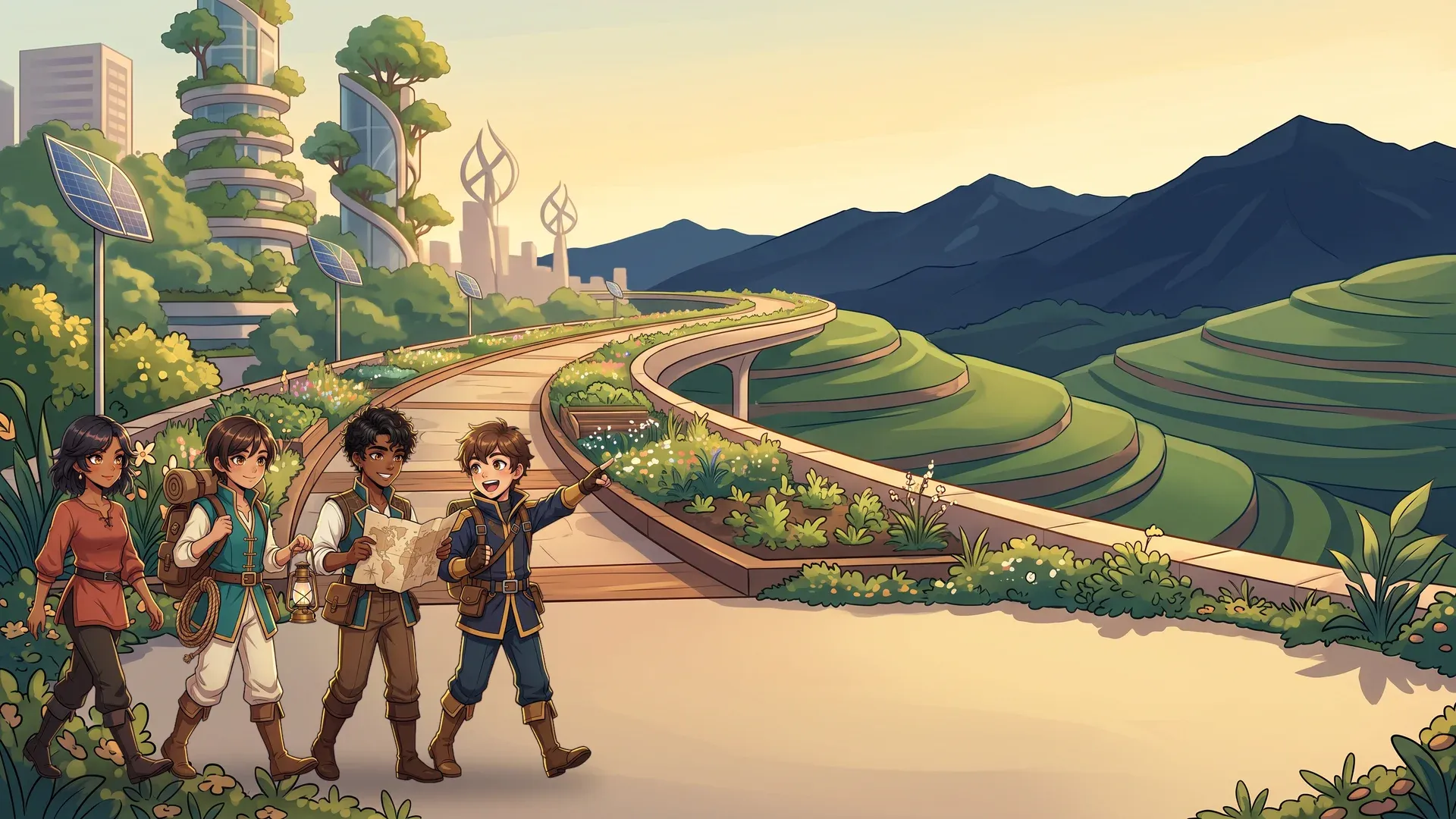 Watch · 2 minThe World We Want, in two minutes
Two ways this can go
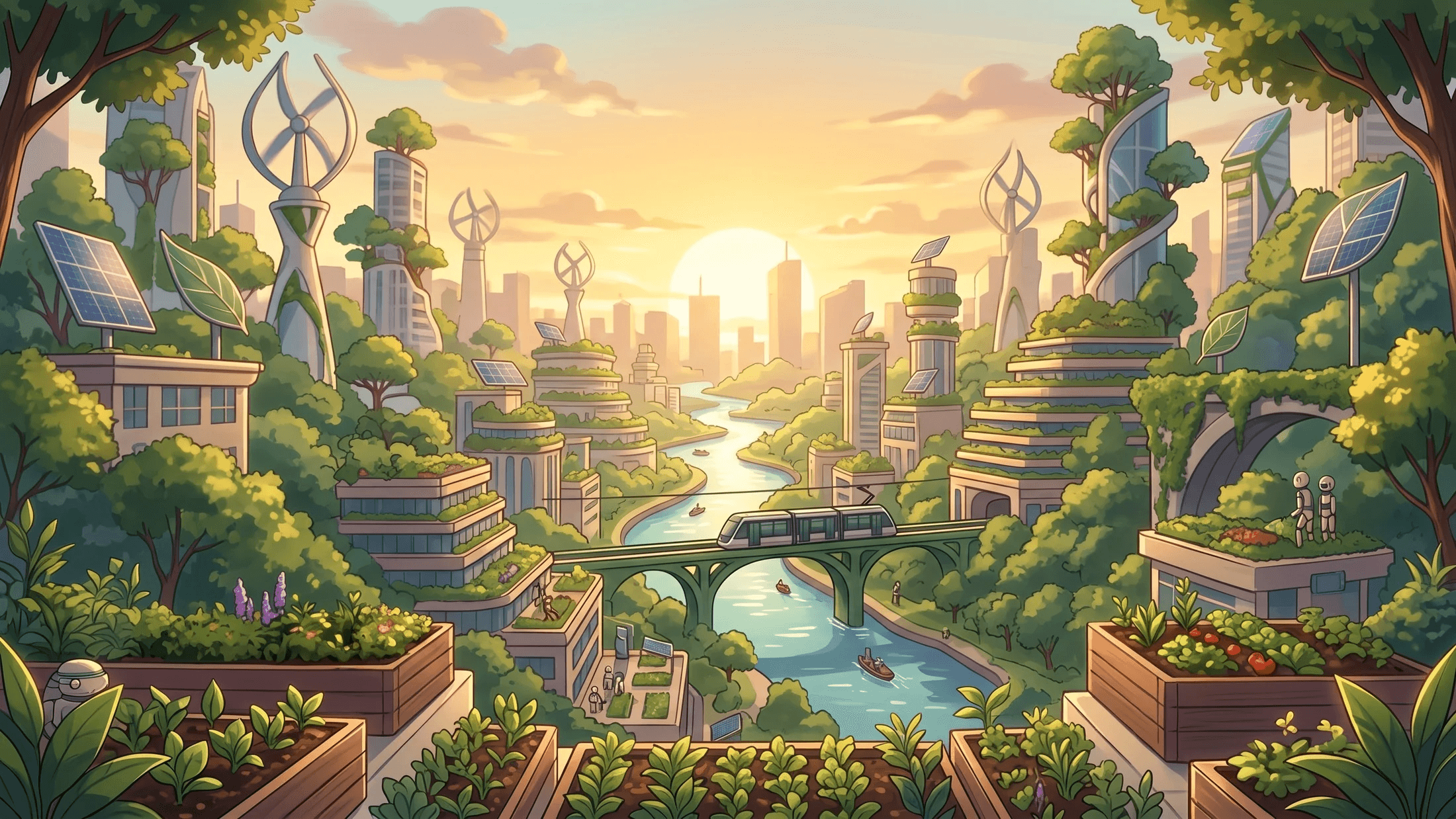
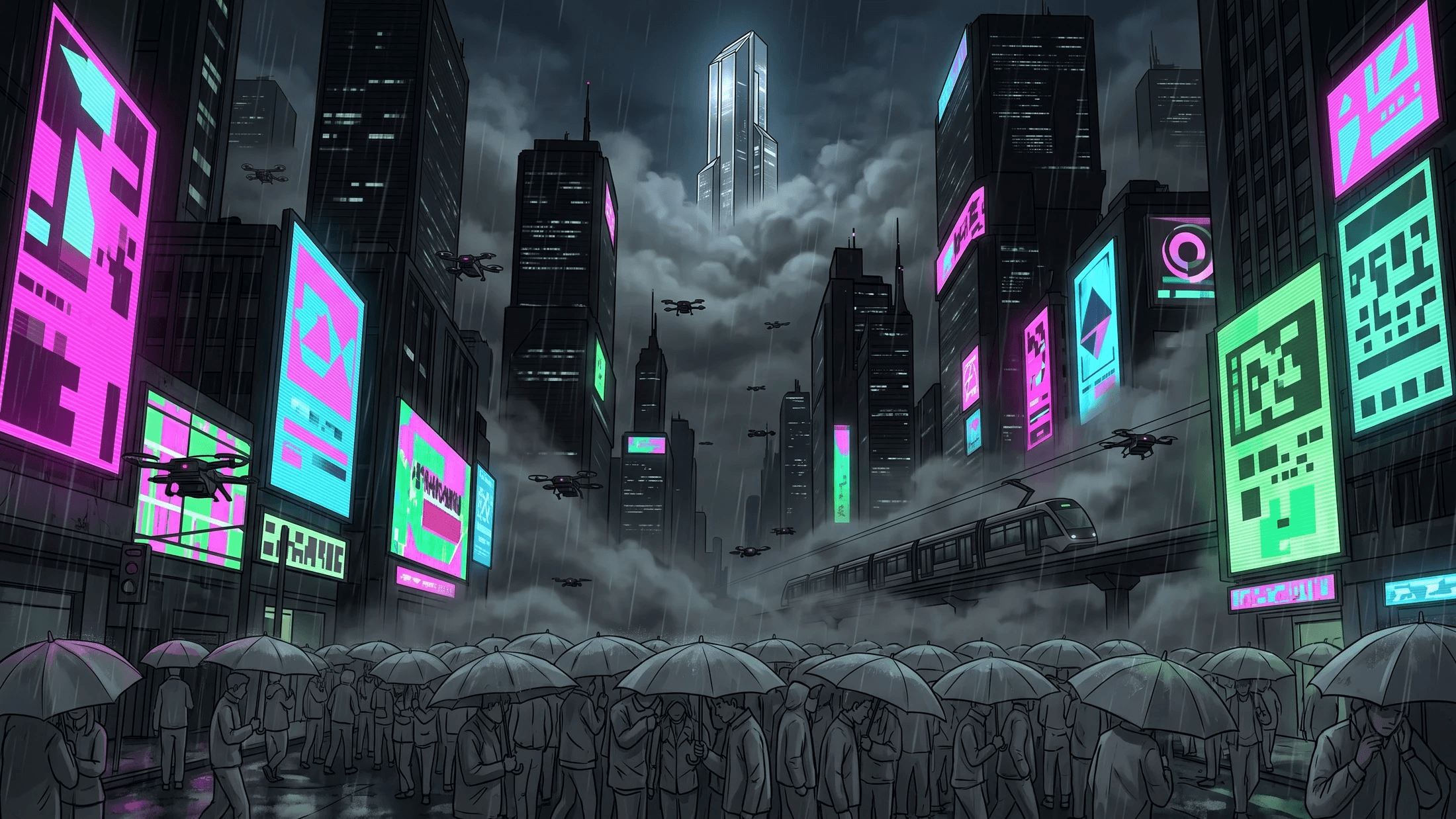
Their wayIf it plays out their way, they’ll own everything... and we’ll live on whatever pennies they hand us.
The world we wantA world where you can do anything you choose. Not what someone will pay you to do. Not what society asks of you. What you choose.
So let’s imagine the future we actually want.
What it looks like
An ordinary Tuesday in Ridgeview
Every AI company is promising us a future of abundance. And none of them can tell you what your Tuesday looks like. Here’s my attempt.
Picture an ordinary weekday in 2045 in Ridgeview, a farm-valley town of about 3,000 people. The town and everyone in it are made up, but almost every machine you’ll meet already exists somewhere today.
5:40 a.m.
The bakery
Tess lets herself into the bakery on Mill Street, where five other bakers from the local bakers’ guild are already arguing about which flour makes the best bread. It’s an argument about taste, not supply. Nobody pays them to come into work. If they’d stayed in bed, the bakery’s machines would have made the town’s bread instead. To the people who choose to do things, the work is play.
The rule
7:15 a.m.
Lena and Pip
Tess’s daughter Lena, fourteen, eats breakfast with Pip, her personal machine: an AI the family owns, linked to a robot body about as tall as the counter. It’s the family’s to use however they need, and when they don’t need it, they can lend it out to help with other people’s jobs.
The power
9:30 a.m.
The creek
Eleven people in rubber boots are putting the bends back in Willow Creek, which was straightened into a ditch decades ago and now floods the lower fields every spring. They’re also building what would be a startup today: cheap sensors that warn every farm downstream before the water rises. They’re a party, a group formed for one quest that will break up when it’s done.
The frontier
11:00 a.m.
The market
Sam fills a canvas bag with coffee, eggs, apples and the guild’s bread, then walks out. There’s no checkout and no cash exchanged, because every essential need is already paid for. We have more important things to spend our effort on than working to pay bills for things we have more than enough of!
The floor
3:00 p.m.
The front hall
Every resident owns one equal share of the town’s trust, and with it one vote on how the town’s machines and resources are used: what gets built next and what comes first. Last month Ridgeview sold Dry Creek $48,000 of grain and bought $40,000 of stored solar power. Both towns keep their books on the same shared ledger, so the two trades net out, and only the $8,000 difference was settled in dollars.
The ownership


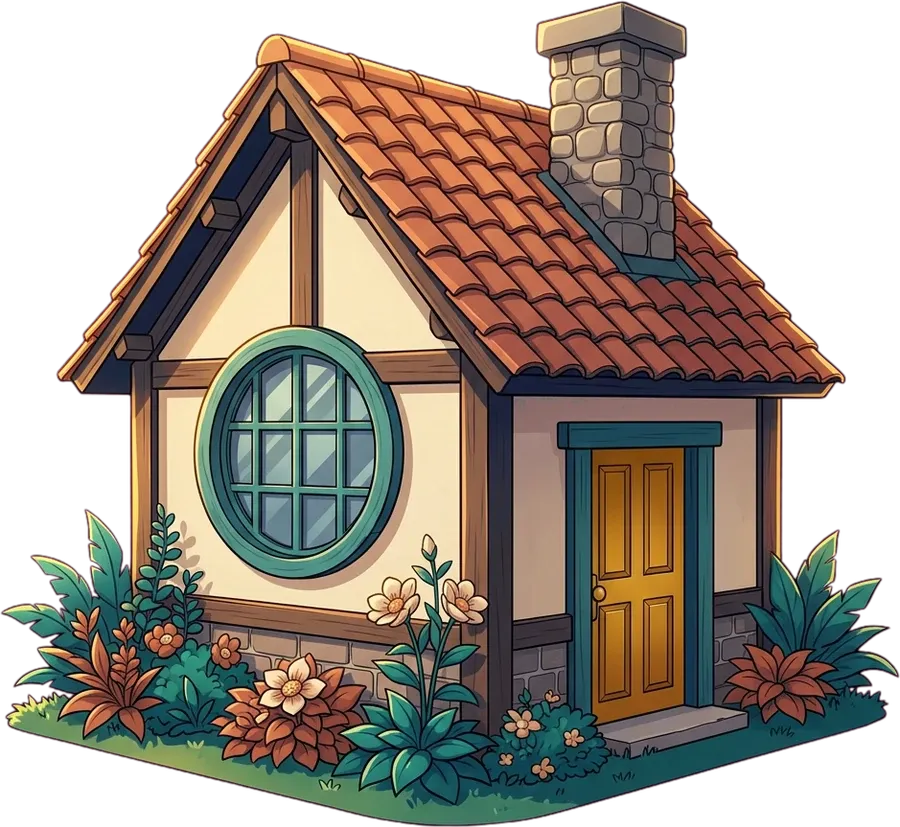
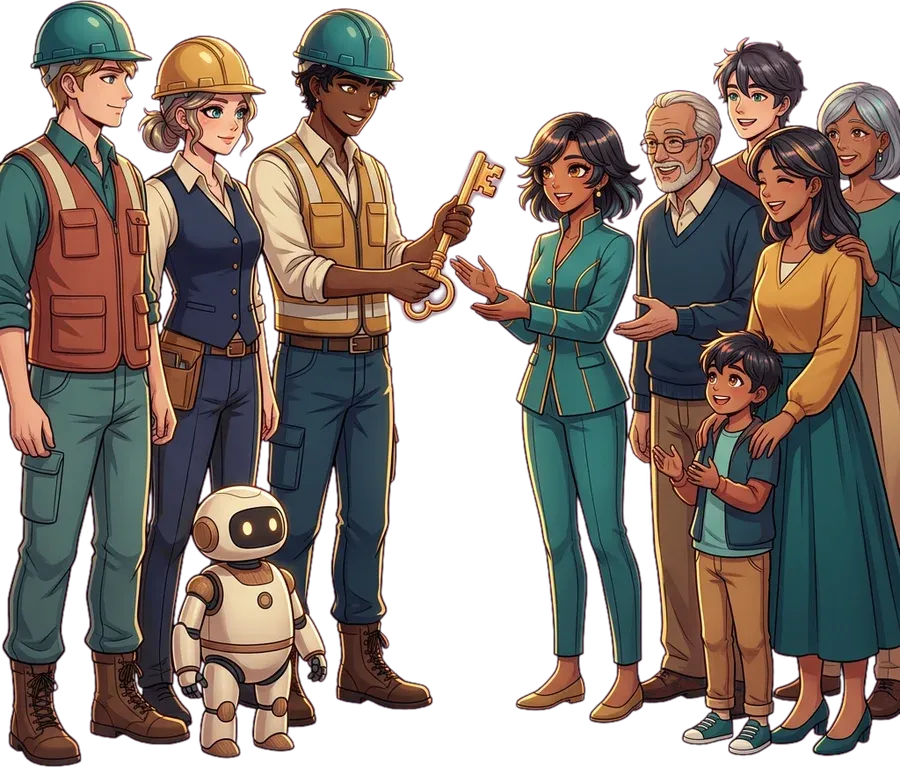
Ridgeview, its people and every number about them are invented and illustrative.

How we build it
Every system of power before ours ended.
The old system was always going to fall. What came next depended on what was ready to replace it.
Here’s how we build it, in four steps.
- Step 1Build machine labor on demandMachine intelligence plus machine bodies: AI that can plan the work, in robots that can go and do it. This part is already underway.
- Step 2Point it at everything scarceEnergy first. Then critical minerals and new materials, then food and water. The end state is big factories that build small ones, so every community can make what it needs locally, without running down what we can’t replace.
- Step 3Deploy it like the power gridMachine labor ratchets up or down with need. It’s a supplement to scarce human labor, not a replacement for it. Everyone has a machine of their own, and many more can be called on when a job is too big for one.
- Step 4Gift it backWhether a builder runs the machines for a return first or public funds pay for them, after a set period they belong to the people who live there. That’s the inheritance worth leaving: working infrastructure, maintained by the community that owns it.
And if wages fall before it’s built? There’s a plan for that too →
What we want
Freedom and safety are twins
We want to live in a world of maximum agency, and maximum protection from harm.
Many people (rightfully) think these things are mutually exclusive from one another. In actuality, they are twins. In order to be free, we must also be safe: safe from financial ruin, hunger, or losing your home.


A floor for everyone, and a frontier for anyone.
Checked, sourced and argued with
Don’t take it on faith
Every claim is sourced, every hard objection has a written answer, and The Abundance Economy whitepaper works the idea into a design that an actual town could pilot, if it wanted to.
The core path
The whole idea, in five steps
Read these essays to see how machine labor on demand can build a better future, why everyone needs to be free to choose their own work, no matter what, how we decide who owns the machines in a decentralized, abundant future, and why the floor we all stand on is real things and services, not a basic income check.
Start here · 5 min read
The AI industry has never told you what’s in it for youPart 1 · 10 min read · ▶ 3:23 film
Machines can make us both free and safePart 2 · 13 min read · ▶ 2:33 film
If a human wants to do a job, a machine shouldn’t take itPart 5 · 11 min read · ▶ 3:57 film
Every town can own its own power plant and chip fabPart 6 · 11 min read · ▶ 2:26 film
UBI won’t work. Universal basic goods will.
In this world, you can be free... because you’re safe.
Futurespective
Help build it
New ideas and films every week or two from Futurespective, by email. Free, with no paywall.