The World We Want, in 25 short films
Every idea has a short animated film, two to five minutes long. Watched in order, they’re the quickest way to understand the whole idea without skipping the hard parts. Start with the first two minutes and see if you want the next.
▶ Watch the first 2 minutesBook One: The world we want · Book Two: Living in it · Book Three: Building it
Film · 2:09
The World We Want, in two minutes
Up next
Book One · 9 films · 28 min
The world we want
 ▶ 2:09
Film
The World We Want, in two minutes
 ▶ 3:23
Part 1
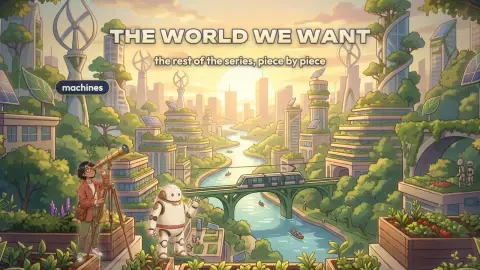
Machines can make us both free and safe
Machine labor on demand can make the essentials free for everyone, and that safety is exactly what makes real freedom possible.
 ▶ 2:33
Part 2
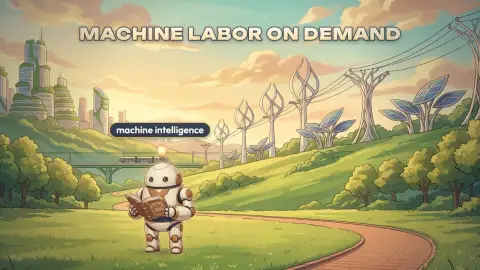
If a human wants to do a job, a machine shouldn’t take it
Machines should do the work nobody wants, people should get first pick of the rest, and everyone should be able to call on the machines for free.
 ▶ 2:12
Part 3
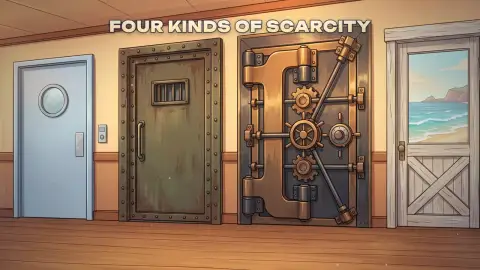
Point the machines at what’s scarce
Machine intelligence should work through every bottleneck, energy and materials first, until scarce things become abundant without draining the stocks we depend on.
 ▶ 5:06
Part 4
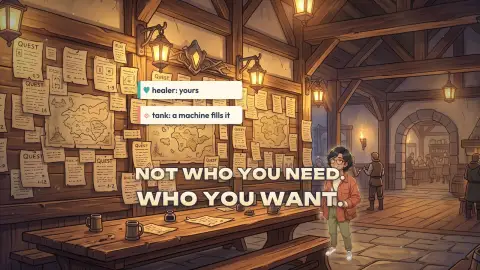
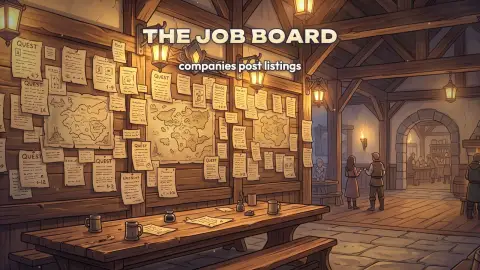
Quests should replace corporations
Once machines can do the work, the permanent corporation loses its purpose, and temporary parties and craft guilds should organize work instead.
 ▶ 3:57
Part 5
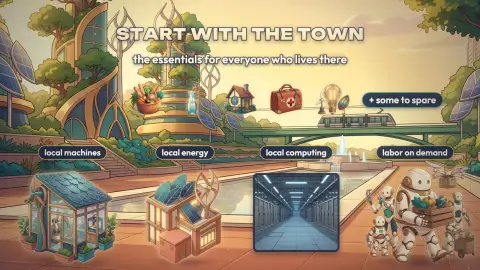
Every town can own its own power plant and chip fab
The machines that make the essentials should belong to every town’s residents in equal, unsellable shares, not to companies or the state.
 ▶ 2:26
Part 6
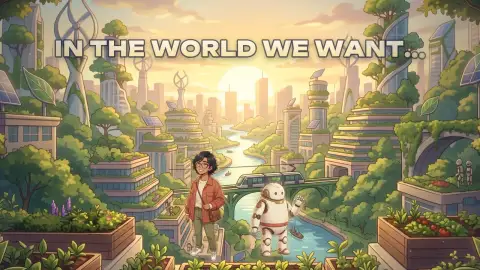
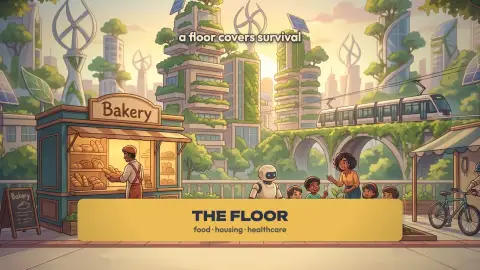
UBI won’t work. Universal basic goods will.
A check raises prices without making more of anything, so the floor should be the essentials themselves, made by machines everyone co-owns.
 ▶ 2:58
Part 7
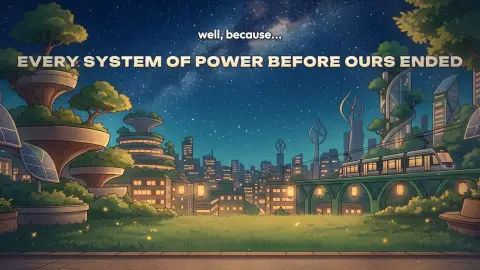
We’re less than a decade from the next economic system
Past economic systems all changed through the same five mechanisms, faster each time, so the next system could be codified within a decade.
 ▶ 3:30
Part 8
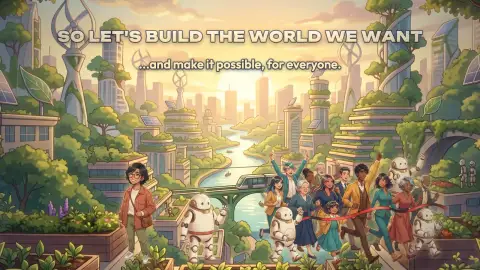
AI will kill packaged meaning. Let it.
AI ends the old story that hard work earns a better life, so meaning should be rebuilt on curiosity, competition, and care, which machines can’t automate.
Book Two · 8 films · 31 min
Living in it
 ▶ 3:54
Part 9
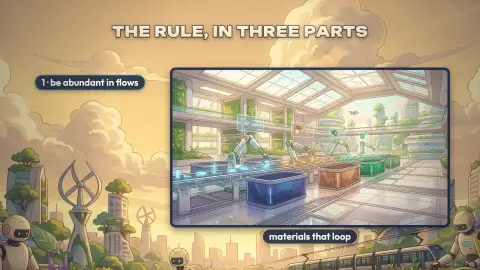
The Earth should be a garden, not a mine
Use renewable flows freely, never drain slow-refilling stocks faster than they return, and point machines at mines and fields instead of inboxes.
 ▶ 4:23
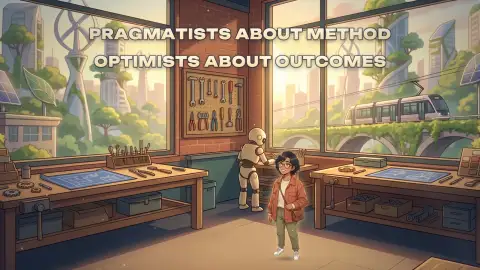
Part 10
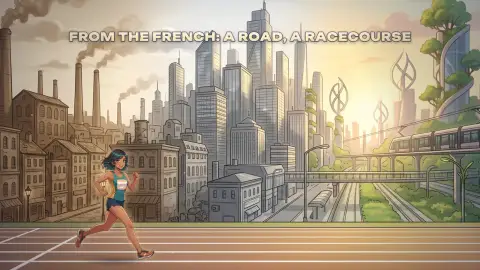
A floor for everyone, a frontier for anyone
After machine labor, the answer is neither socialism nor capitalism, but a floor for everyone and a frontier for anyone.
 ▶ 3:45
Part 11
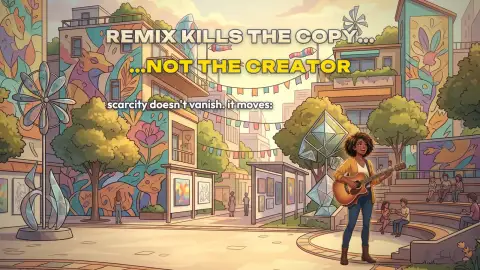
Remix will kill the copy, not the creator
Remix AI makes copies worthless, but not creators. Value moves to the source, so we need ways to pay it.
 ▶ 3:52
Part 12
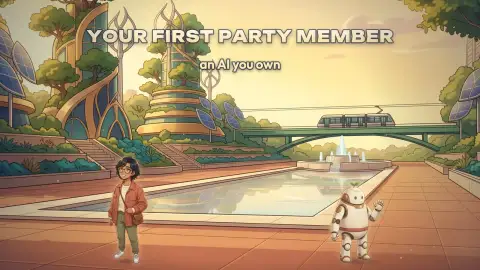
Your first party member should be an AI you own
Everyone’s first AI companion should be one they own, running locally by default, carrying their memory, and never making the final call.
 ▶ 3:50
Part 13
Pokémon already showed us how machine labor should work
Pokémon’s world rehearses an economy of machine labor: free healing, a personal partner plus specialists on call, and workers who can refuse harmful jobs.
 ▶ 3:46
Part 14
You won’t have a career. You’ll have a skill tree.
Once survival stops depending on your job, a career gives way to a skill tree: many skills, each with its own rank.
 ▶ 3:54
Part 15
The Olympics, but for everything
Every trade should compete in open leagues with promotion and relegation instead of for profit, so losing costs a division, never your home.
 ▶ 3:54
Part 16
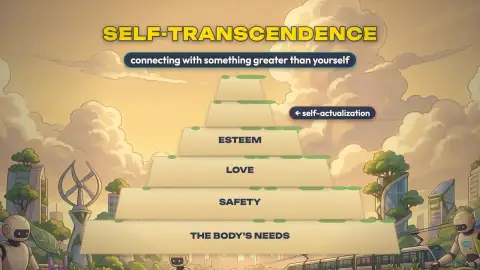
Above self-actualization is the universe
Once machines cover the basics, people can climb above self-actualization to self-transcendence, and exploring the universe is the same climb for a whole species.
Book Three · 8 films · 30 min
Building it
 ▶ 3:47
Part 17
Keep money, add a second ledger
Keep money for scarce things, and add a second ledger, a live count of what each town physically has and needs, so surplus can move to towns that are short.
 ▶ 3:51
Part 18
Every spending bill should show up on your paycheck
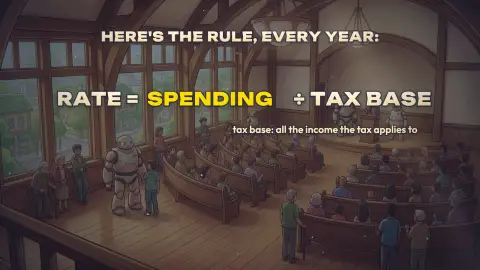
A formula should set the tax rate each year, spending divided by the tax base plus a little extra to pay down debt, so every spending bill shows up on your paycheck.
 ▶ 3:47
Part 19
Plan for the bad transition
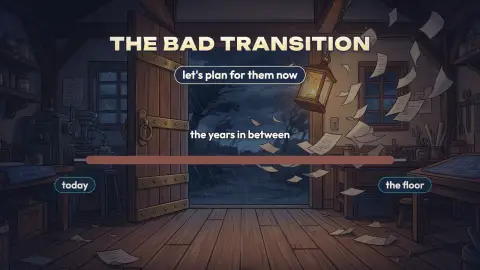
Plan for wages to fall before the free essentials exist, with a five-stage road and safety-net switches that flip when the data says so, not when Congress gets around to it.
 ▶ 3:40
Part 20
Get paid to train the robot that takes your job
Paying people to film their work for robots can be a fair bridge, but only if workers own the footage and share what the robots earn.
 ▶ 3:39
Part 21
The World We Want is mostly constitutional
Nearly everything proposed here is constitutional, but the Constitution draws two lines: handing infrastructure to a town must be agreed up front, and land taxes stay local.
 ▶ 3:51
Part 22
Five takes the AI industry needs to ingest
The AI industry should treat its models as remix, run consumer AI locally, and build machine labor on demand owned by the places it serves.
 ▶ 3:41
Part 23
Emad Mostaque and I agree on the destination, not the road
Emad Mostaque and I agree that checks fail and essential machines should be locally owned, but we split on what the floor is, how big the owner should be, and whether shares can be sold.
 ▶ 3:59
Part 24
Doom or foom, the answer is the same: own the machines
Whether AI’s rise is slow, sudden or deadly, the answer is the same: spread ownership of the machines widely, and agree now on what to do when the numbers cross a line.